 AI-Fluence
GEO: getting into AI answers, not only into search results
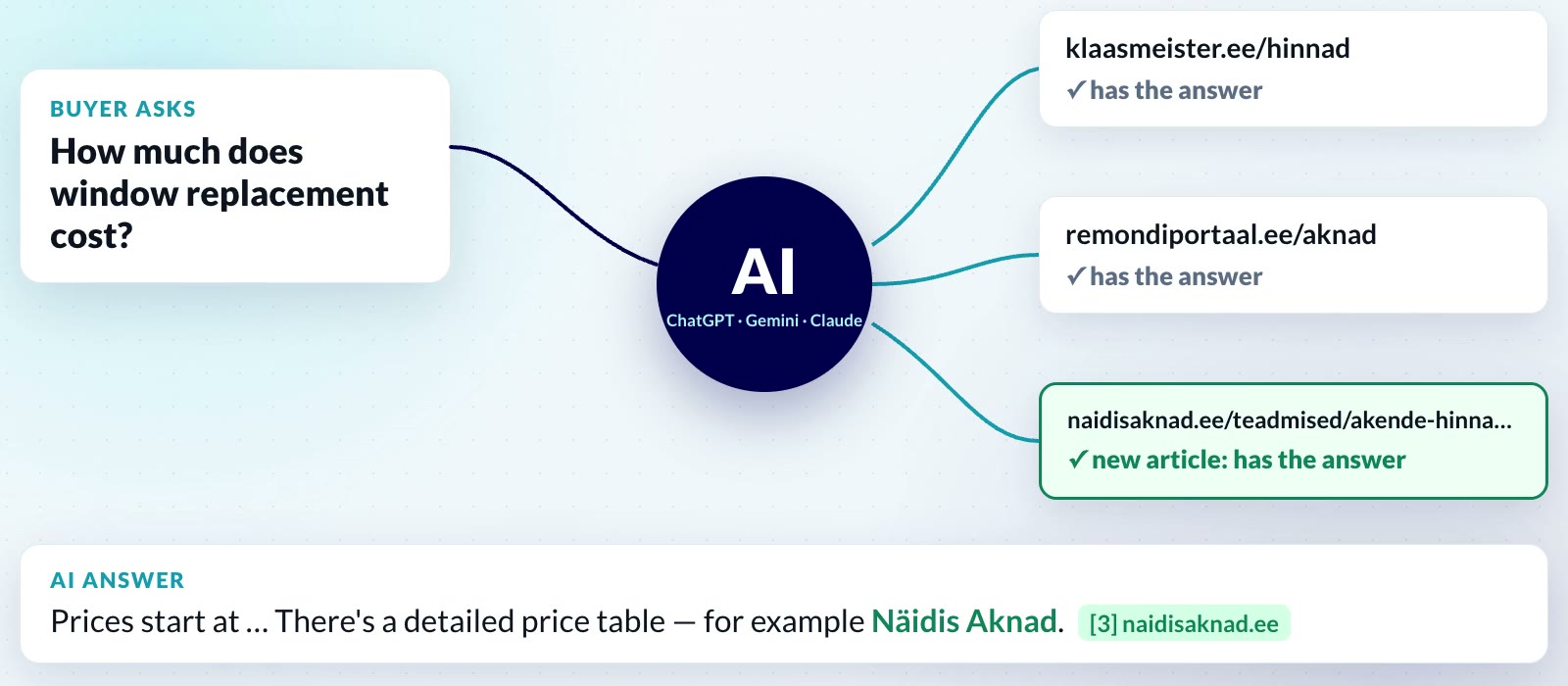
A buyer may no longer click through links. They ask ChatGPT and read the answer. Generative engine optimization, or GEO, is the work of making sure your name is in that answer and that the assistant chooses you.
- We measure before and after, not guess
- We find the pages that decide the answer
- We fix, publish and measure again
What GEO is
The term comes from the research paper “GEO: Generative Engine Optimization” (Aggarwal et al., Princeton University and others, 2023, published at KDD 2024). The authors described how generative engines compose an answer from several pages, and how a page’s content affects whether and how visibly the answer relies on it.
In practice GEO comes down to three questions: does AI name your company, does it recommend you, and which pages does it lean on when it decides. AI visibility is not the same thing as a position on Google’s results page.
How GEO differs from SEO
| SEO | GEO | |
|---|---|---|
| The result | A ranked list of links | One written answer, sometimes one chosen company |
| What to measure | Position and clicks | Whether you were named and whether you were chosen |
| What counts | Your page’s rank | Every page the assistant read, including other people’s |
| How a page pays off | The buyer clicks | The assistant quotes it |
SEO does not go away: the assistants search the web, and a good page helps in both. But GEO also asks what other people’s pages say about you, because the assistant reads them the same way.
How AI-Fluence does GEO
- Measure. Every week we ask ChatGPT, Claude and Gemini your buyers’ questions with web search on and read who was named and who was chosen. See monitoring.
- Find the deciding pages. We record which pages the assistants cited and sort them into four groups. See sources and competitors.
- Fix and publish. The weekly task list says what to fix on your site and where to get onto. The content engine writes articles for the questions you are missing from, and for Reddit and Quora threads we draft the reply.
- Measure again. The next round asks the same questions and shows whether the work moved anything.
What makes a page quotable
An assistant does not rank pages, it takes sentences from them. A page with a short, clear answer at the top, takeaways in full sentences, a readable table and checked facts is easier to quote than a long marketing text. The same holds for other people’s pages: a comparison or a forum thread that mentions you often weighs more with the assistant than your own claim.
What GEO is not
GEO is not a trick that makes AI recommend you. Nobody can guarantee what ChatGPT answers. That is why we start with measurement and keep measuring: every piece of work is tied to a question whose answer it should change, and the rounds show whether it did.
Frequently asked questions
Does GEO replace SEO?
No. The assistants search the web, so a good page helps in both. GEO adds the question of what the assistant says in its answer and which pages it relies on.
Is GEO the same as AEO or LLM optimisation?
In substance, yes: the names are used for the same work. We use GEO, the term from the 2023 research paper.
Do you guarantee AI will recommend us?
No, and nobody can. We measure where you stand every week, show who is recommended instead and why, and do the work that changes it.
How long before we see results?
The first round shows where you stand within a week. No page changes the answer on the day it goes up; the rounds show when it does.
Further reading
See also
See what AI says about you today
The first round shows where you stand, before anything is written.